Presidente interino saharaui urge a la ONU a negociar con un calendario fijo

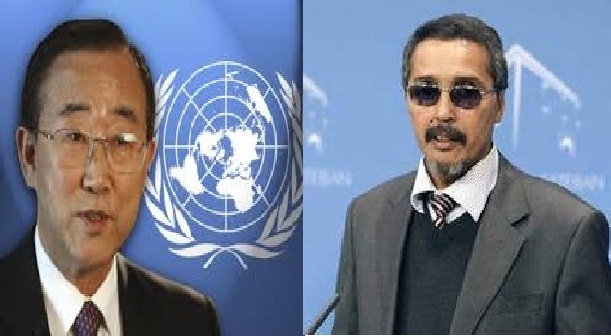
El presidente interino saharaui, Jatri Adduh, instó hoy a Naciones Unidas a poner en marcha conversaciones directas, intensas, de alto nivel y con un calendario definido para resolver el conflicto entre el Frente Polisario y Marruecos a través de un referéndum de autodeterminación.

«La ONU está llamada hoy más que nunca a elaborar un plan para el proceso de conversaciones directas, intensas y de alto nivel entre el Frente Polisario y Marruecos, en presencia de los principales responsables de ambas partes», escribió Adduh en una carta dirigida al secretario general de Naciones Unidas, Ban Ki-moon, citada por la agencia oficial SPS.

El objetivo es hallar una resolución «conforme con las resoluciones del Consejo de Seguridad y la Asamblea General para resolver el conflicto del Sahara Occidental a finales de 2016», resaltó.

«La Secretaría General de la ONU, en particular su enviado personal, el embajador Christopher Ross, y su representante especial y jefe de la MINURSO, Kim Bolduc, debe adoptar un enfoque más urgente para la organización del referéndum de autodeterminación del pueblo saharaui», insistió el presidente interino.

Adduh pidió, asimismo, el regreso de la Misión de Naciones Unidas para el Sáhara Occidental (MINURSO) y el respeto pleno a su función inicial, sin interferencia o restricción de movimiento, «de conformidad con los principios y prácticas aplicables a las misiones de paz de la ONU en el mundo».

El secretario general del Frente Polisario condenó, igualmente, el intento flagrante de Marruecos de poner fin a la misión de la ONU en Sáhara Occidental.

«Casi dos meses después de la aprobación de la resolución 2285 del Consejo de Seguridad sobre el Sáhara Occidental, no se ha producido ningún progreso en el proceso político patrocinado por la ONU», lamentó.

El Frente Polisario también expresó su firme oposición a la «reunión técnica» que tuvo lugar entre los representantes de la ONU y Marruecos el pasado 10 de junio en la ciudad ocupada de Al Ayun y recordó que Marruecos no tiene soberanía sobre el territorio del Sáhara Occidental, en virtud del derecho internacional.

«Esta reunión ha sido ampliamente publicada por los medios de comunicación marroquíes, que deliberadamente han propagado la participación de un empleado de origen marroquí en la delegación técnica», criticó.

La MINURSO fue creada para supervisar el cumplimiento del alto el fuego acordado entre el Frente Polisario, representante del pueblo saharaui, y Marruecos, la potencia ocupante desde 1975.

Marruecos decidió retirar parte de sus efectivos de la MINURSO en respuesta a la visita de Ban Ki-moon a principios de marzo pasado durante la que utilizó la palabra «ocupación» para referirse al control marroquí sobre la mayor parte del Sáhara.

a través de Presidente interino saharaui urge a la ONU a negociar con un calendario fijo

Nomination of the late President Mohamed Abdelaziz for the 2016 Nobel Peace Prize, | Australia Western Sahara Association

Nomination for the 2016 Nobel Peace Prize for Mohamed Abdelaziz, President of the Sahrawi Arab Democratic Republic submitted by Suzanne Scholte January 30, 2016

As the democratically elected President of the Sahrawi Arab Democratic Republic (SADR), Mohamed Abdelaziz has labored his entire life to see justice prevail for the people of Western Sahara, the only colony yet to be decolonized in Africa.  Abdelaziz has carefully guided the POLISARIO, an organization he helped found, and the SADR, a Republic he has lead since his first election in 1982, to seek peaceful resolution to this conflict first through the International Court of Justice (1974) and more recently through the United Nations (1991).

Despite enormous pressure to return to armed conflict, President Abdelaziz has remained steadfast in this commitment to resolve this issue peacefully through the long promised United Nations’ sponsored referendum. Despite the ongoing atrocities committed against the Sahrawi people and the exploitation of their natural resources in Moroccan-Occupied Western Sahara, Abdelaziz has relied on the rule of law and the international community to press for human rights protections for his people and the natural resources of their country.  He has directed his diplomats to seek redress peacefully relying on the justness of their cause.

Despite the harsh conditions in the refugee camps where hundreds of thousands of Sahrawis are forced to live in the Sahara Desert while they await the referendum, Abdelaziz has guided his people to establish a Republic, which is now recognized as the legitimate government of Western Sahara by over 70 nations.  Under his leadership the SADR was admitted as a full member of the African Union.  An indication of the respect he commands across the African continent is the fact that he has also been elected several times to serve in the leadership of the African Union.

Under his leadership the SADR established a constitution guaranteeing the right to vote for all citizens 18 years of age; guaranteeing equal rights for women; calling for free market economy; religious freedom; and elected government.  In fact, the Sahrawis have run their refugee camps utilizing a democratic system in which elections are held for national leadership and Governors of the refugee camps.  Women have served as Governors and currently are well represented in the national leadership.

Abdelaziz has led the Sahrawis to establish educational institutions that have resulted in an over 90% literacy rate among his people, making them the most educated African people group – and this was achieved while they were refugees!

Sahrawi women have been fully integrated in their society and enjoy the same rights and opportunities as men, and there is full enfranchisement for all Sahrawis eighteen years of age and older to vote and to participate in self-governance.

Abelaziz has tried repeatedly to not seek reelection for President because of his commitment to see democracy flourish and his desire to transfer power peacefully to his successor.  However, the Sahrawi people have continued to re-elect him, even when he has not sought re-election.   They believe he is the one who must continue to guide them until self-determination is realized and the long struggle over Western Sahara is peacefully and finally resolved.

As someone who has worked in human rights issues for over twenty years, I have never found a more noble and honorable people than the Sahrawi people of Western Sahara or a more remarkable leader than Mohamed Abdelaziz.

During a time in history when terrorism is increasingly used as a means to advance one’s objectives, what Abdelaziz has been able to accomplish personifies what the Nobel Peace Prize represents and makes him a worthy candidate for the 2016 Nobel Peace Prize.  His selection would be especially meaningful to the Muslim world and the people of North Africa and the Middle East whose communities are facing such terrible tragic conflicts and instability.

Curriculum vitae

H.E. Mr Mohamed Abdelaziz, President of the Sahrawi Arab Democratic Republic and Secretary-General of the Frente POLISARIO

He was born in Smara (Western Sahara) in 1948 where he did his studies.

He took part in the establishment of the national movement that prepared the liberation struggle.

He is a founding member of the Frente POLISARIO.

He was elected member of the Politburo of the Frente POLISARIO in its Constitutive Congress, on 10 May 1973.

He was the Head of a Department during the clandestine phase of struggle against Spanish colonisation.

He was a Commander of a military region until his election as Secretary-General of the Frente POLISARIO and President of the Command Council of the Revolution in August 1976.

He was elected as President of the Sahrawi Arab Democratic Republic (SADR) in October 1982.

He was re-elected to the same post in 1985, 1989, 1991, 1995, 1999, 2003 , 2007,2011 and 2015

He was elected several times as Vice-president of the Organisation of African Unity (now the African Union).

Married and father of six children.

a través de Nomination of the late President Mohamed Abdelaziz for the 2016 Nobel Peace Prize, | Australia Western Sahara Association

El Presidente de la República inaugura un nuevo centro para víctimas de guerra y minas | Sahara Press Service

dsc_0231


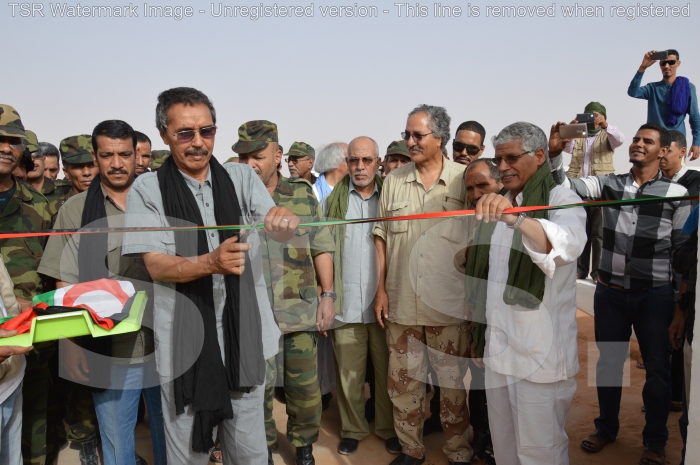
(Escuela 9 de junio) ,26/06/16 (SPS) -. El Presidente  de la República y Secretario General del Frente POLISARIO, Sr. Jatri Adduh inauguró este domingo el nuevo Centro para acoger a  víctimas de guerra y minas, en presencia de miembros de la Secretaría Nacional del  POLISARIO  y  miembros del  Gobierno.

La  financiación de este centro  corre a cargo de la Asociación  de Amigos  del Pueblo Saharaui de Sevilla, España.

La representante de la asociación  ,Sra. Charo Escobar dijo que para  ella  » es un placer poder  contribuir  con esta  labor aliviar el sufrimiento de los refugiados, especialmente a este grupo que merece toda la atención  y  la seguridad de vivir una vida normal.»

Por su parte el  representante del Ministerio de Defensa Nacional y Director de Suministro Militar, Sr. Mustafá Sid Bachir  dijo que este centro es de vital  importancia para  aliviar el sufrimiento de las víctimas de guerra y minas.

Tras el acto  de inauguración los presentes  recorrieron  las instalaciones y locales  que comprende  el centro y  los servicios y medios para asegurar  la comodidad  de las víctimas.

A modo de referencia,  el centro lo administra  y supervisa el Ministerio   de Defensa Nacional. SPS

a través de El Presidente de la República inaugura un nuevo centro para víctimas de guerra y minas | Sahara Press Service

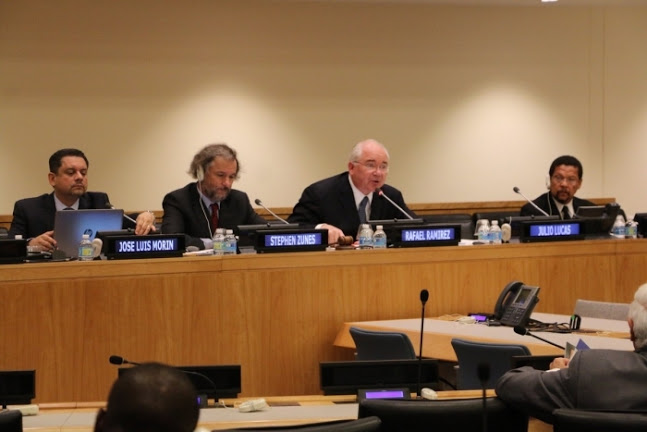
Stephen Zunes: Testimony before the conference on decolonization | Sahara Press Service

unnamed


United Nations, June 23, 2006

Stephen Zunes, University of San Francisco

My interest in the dispute over Western Sahara is based not simply upon my belief in justice for that country’s people, but its implications in regard to international law and the principles upon which theUnited Nations organization is founded. These include the right of self-determination by non-self-governing territories and the inadmissibility of any country expanding its territory by force. Since I am not from Western Sahara, I have no stake as to whether the people of that country choose integration with Morocco, independence, or some sort of autonomy within the Moroccan kingdom. However, as a non-self-governing territory, they must have the right to make that choice.

The Kingdom of Morocco remains in contravention of a series of UN Security Council resolutions calling on that government to allow the people of the territory the right to determine their own future, including the option of independence.

Instead, the Moroccan government and its allies have been pushing for a so-called “autonomy” plan. This proposal falls well short of what is required to bring about a peaceful resolution to the conflict. Moreover, it sets a dangerous precedent which threatens the very foundations of the post-World War II international legal system.

To begin with, the proposal is based upon the assumption that Western Sahara is part of Morocco, a contention that has long been rejected by the United Nations, the International Court of Justice, the African Union, and a broad consensus of international legal opinion. To accept Morocco’s autonomy plan would mean that, for the first time since the founding of the United Nations and the ratification of its Charter more than seventy ago, the international community would be endorsing the expansion of a country’s territory by military force and denying a recognized non-self-governing territory its right of self-determination, thereby establishing a very dangerous and destabilizing precedent.

If the people of Western Sahara accepted an autonomy agreement over independence as a result of a free and fair referendum, it would constitute a legitimate act of self-determination. However, Morocco has explicitly stated that its autonomy proposal “rules out, by definition, the possibility for the independence option to be submitted” to the people of Western Sahara, the vast majority of whom – according to most knowledgeable international observers – favor outright independence.

Even if one takes a dismissive attitude toward international law, there are a number of practical concerns regarding the Moroccan proposal as well:

One is that the history of respect for regional autonomy on the part of centralized authoritarian states is quite poor, and has often led to violent conflict. For example, in 1952, the United Nations granted the British protectorate (and former Italian colony) of Eritrea autonomous federated status within Ethiopia. In 1961, however, the Ethiopian emperor unilaterally revoked Eritrea’s autonomous status, annexing it as the country’s fourteenth province, resulting in a bloody thirty-year struggle for independence and subsequent border wars between the two countries which have claimed hundreds of thousands of lives.Similarly, the unilateral revocation of Kosovo’s autonomy by the Serbian leader Slobodan Milosevic in1989 led to a decade of conflict, an eleven-week NATO bombing campaign, and the still-unresolved legal status of that territory.

Based upon Morocco’s record of breaking its promises to the international community regarding the United Nations-mandated referendum for Western Sahara and related obligations based on the 1991 cease fire agreement, there is little to inspire confidence that Morocco would live up to its promises to provide genuine autonomy for Western Sahara. A close reading of the proposal also raises questions as to how much autonomy is even being offered. Important matters such as control of Western Sahara’s natural resources and law enforcement (beyond local jurisdictions) remain ambiguous.

In addition, the proposal appears to indicate that all powers not specifically vested in the autonomous region would remain with the Kingdom. Indeed, since the King of Morocco is ultimately invested with absolute authority under article 19 of the Moroccan Constitution, the autonomy proposal’s insistence that the Moroccan state “will keep its powers in the royal domains, especially with respect to defence, external relations and the constitutional and religious prerogatives of His Majesty the King” appears to afford the monarch considerable latitude in interpretation.

Furthermore, Morocco has been illegally colonizing the occupied Western Sahara with tens of thousands of settlers. As in the case of the Israeli settlers of the West Bank and Golan Heights, the transfer of a country’s civilian population onto lands seized by military force is a clear violation of the Fourth Geneva Convention. These Moroccan settlers already outnumber the indigenous population, who would therefore not be able to exercise whatever limited degree of self-rule that the kingdom may offer.

Still another reason to distrust Morocco’s proposed autonomy plan is the poor human rights situation in the occupied Western Sahara, where any expression of nationalist sentiments—displaying flags, signs, protests, or any public expression—is brutally suppressed. I have visited over seventy countries—including Iraq under Saddam Hussein and Indonesia under Suharto—and I have never seen a worse police state. The US-based NGO Freedom House—which, if anything, has a something of a bias in support of pro-Western governments—has ranked Western Sahara as having one of very worst human rights situations in the world. Amnesty International and other reputable human rights organizations have issued a number of scathing reports on human rights abuses by Morocco. The brutal suppression by Moroccan occupation forces of those who support independence is but one indication of the Moroccan government’s lack of respect for the well-being of the people of Western Sahara and underlies the imperative of including a human rights mandate for MINURSO, currently the only UN peacekeeping force which lacks that authority.

Some observers see autonomy as a reasonable compromise between independence and integration, constituting a kind of win/win situation between the Sahrawi desire for self-governance and the Moroccan desire for sovereignty over the territory.  However, unlike certain ethnic conflicts or border disputes where such a “third way” between the demands of two parties would constitute a creative means of conflict resolution, Western Sahara is a clear-cut case of self-determination for a people struggling against foreign military occupation. This is not a matter of “splitting the difference,” given that one party is anon-self-governing territory under an illegal foreign military occupation and the other party is an occupier effectively playing the role of a colonizer.

This is why the international community rejected Iraq’s proposals in 1990-91 for some kind of compromise regarding its occupation of Kuwait and why the U.S.-led “peace process” on Israel/Palestine based upon the alleged need for the two parties to “compromise” on the extent of Israeli control over territories occupied by Israel in the June 1967 war has failed to resolve the conflict. The Polisario Front has already offered guarantees to protect Moroccan strategic and economic interests if allowed full independence. To insist that the people of Western Sahara must give up their moral and legal right to genuine self-determination is therefore not a recipe for conflict resolution, but for far more serious conflict in the future.

The recent illegal expulsion of MINURSO civilian personnel and the anti-UN incitement by the Moroccan regime in response to the Secretary General’s use of the word “occupation”—despite the fact that the term has already been included in UN General Assembly resolutions and is in common use among international legal scholars—is but one indication of that government’s unwillingness to live up to its international responsibilities.

Morocco has succeeded in resisting its international legal obligations for more than four decades through its support from France and, under some administrations, the United States as well.  As a result of French and American veto threats, the Security Council has failed to place the Western Sahara issue under Chapter VII of the United Nations Charter, which would give the international community the power to impose sanctions or other appropriate leverage to force the Moroccan regime to abide by the UN mandates it has to date disregarded.

It was similar support by Western industrialized nations of Indonesia which for many years prevented resolution to the occupation of East Timor. It was only after human rights organizations, church groups, and a wide array of activists in the United States, Great Britain, and Australia successfully pressured their governments to end their support for Indonesia’s occupation that the Indonesian government was finally willing to offer a referendum which gave the East Timorese their right to self-determination. It may take similar grassroots campaigns in Europe and North America to ensure that Western powers live up to their international legal obligations and pressure Morocco to allow the people of Western Sahara the right to determine their own destiny.

Given Morocco’s unwillingness to live up to its international legal responsibilities, its refusal to live up to its obligations under the cease fire agreement, and the failure of the UN Security Council to enforce its mandate, the Polisario has threatened to resume the armed struggle. As a people under foreign belligerent occupation in non-self-governing territory denied the right to self-determination, the Western Saharans do have the right of armed resistance.  However, this would be a serious strategic error that would only play into the hands of Morocco and its supporters and weaken their appeal for badly-needed international support.

The most effect means of resistance would be the kind of nonviolent civil resistance which has brought down dozens of autocratic regimes in recent decades and freed the Baltic republics from Soviet occupation. We have seen impressive examples of such resistance in the occupied Western Sahara in recent years.

There are limits to what such nonviolent resistance can achieve, however, due to the fact that the indigenous population is now badly outnumbered by Moroccan settlers.

Still, the growth of the non-violent resistance struggle in the occupied territories offers a unique opportunity to build international awareness of the conflict among civil society organizations that could offer much-needed solidarity with the freedom struggle inside Western Sahara. Nonviolent civil resistance and other forms of non-cooperation provide an important signal to the Moroccan occupiers and the international community that the people of Western Sahara still demand their freedom and will not accept anything less than genuine self-determination. The use of strategic nonviolent methods of resistance also makes it easier to highlight gross and systematic violations of international humanitarian law by Moroccan occupation forces, gain sympathy and support from the international human rights community, and provide greater pressure on the French, American and other governments which continue to prevent appropriate pressure on Morocco to allow the people of Western Sahara the right to determine their own destiny.

There is a small but growing movement in Europe supporting Western Sahara’s right to national self-determination, as well as some similar civil society initiatives in South Africa, other African countries, Australia, Japan, and the United States. A growing focus on the issue of the illegal exploitation of natural resources in Western Sahara is providing proponents of international law and human rights a means of which to challenge governments and companies which illegally take advantage the occupationby targeting them through campaigns advocating boycotts, divestment, and sanctions.  At this point, however, such movements are too small to have much impact on government policies, particular those of France and the United States, which are the two governments most responsible for the failure of the United Nations to enforce its resolutions addressing the conflict. This can change, however: Just over twenty years ago, there was relatively little civil society activityin developed nations regarding East Timor, but a dramatic growth in such activism in the late 1990s played an important role in making possible East Timor’s eventual independence.

A similar campaign may be the best hope for the people of Western Sahara and the best hope we have to save the vitally important post-World War II legal principles enshrined in the United Nations Charter.

If the international community cannot fulfil its responsibilities on this issue – where the legal and moral imperatives are so clear – how can it deal with more complex issues? If the international community cannot uphold the fundamental right of self-determination, how can it successfully defend other human rights? If the international community cannot enforce a series of United Nations Security Council resolutions regarding such a blatant violation of the UN Charter as a member state invading, occupying, annexing and colonizing a neighboring country, how can it enforce other provisions of international law?

The stakes are not simply about the future of one small country, but the question as to which principle will prevail in the 21st century: the right of self-determination, or the right of conquest? The answer could determine the fate not just of the Western Sahara, but that of the entire international legal order for many decades to come. (SPS)

a través de Stephen Zunes: Testimony before the conference on decolonization | Sahara Press Service

Le Front Polisario préoccupé par le non retour de la composante civile de la MINURSO au Sahara occidental (président de la République) | Sahara Press Service

Bir Lahlu (territoires sahraouis libérés), 25 juin 2016 (SPS) Le président de la République, SG du Front Polisario, M. Khatri Addouh a exprimé samedi,  les préoccupations du Front Polisario face au refus du Maroc de permettre le retour de la composante civile de la Minurso dans ses pleines fonctions, conformément à la  résolution 2285 (2016) du Conseil de sécurité.

Dans une lettre adressée au SG de l’Organisation des Nations Unies, M. Ban Ki-moon, M. Addouh a regretté qu’»après près deux mois de l’adoption de la résolution 2285 (2016) du Conseil de sécurité des Nations unies sur le Sahara occidental, il n’y  a pas eu de progrès dans le processus politique parrainé par l’ONU pour trouver une solution juste, équitable et pacifique qui garantit le droit du peuple sahraoui à l’autodétermination conformément à la résolution 1514 de l’Assemblée générale des Nations Unies et le plan de règlement des Nations Unies approuvé par le Conseil de sécurité dans ses résolutions 658 (1990) et 690 (1991).

«Jusqu’à présent nous ne constatons pas de progrès vers le rétablissement de cette composante dans ses fonctions pour laquelle elle mandatée par le Conseil de sécurité à savoir l’organisation un référendum d’autodétermination au Sahara occidental. Il nous semble que les Nations Unies permettent encore au Maroc de poursuivre ses tentatives de menacer et de saper l’indépendance et la crédibilité de la MINURSO dont la mission est bien définie par le Conseil de sécurité», a-t-il martelé.

Le Front Polisario a également exprimé sa forte opposition à la «réunion technique», qui a eu lieu entre les représentants de l’ONU et le Maroc le 10 juin, 2016 pour la première fois dans la ville d’El Aaiun occupée, dont le Maroc n’a pas de souveraineté sur le territoire du Sahara occidental, en vertu du droit international. «Cette réunion a été largement publiée par les médias marocains qui ont  délibérément propagé la participation d’un employé d’origine marocaine à la délégation technique, ce qui n’a pas de lien avec la question du Sahara occidental», a déploré le président de la République.

Dans ce contexte, M. Addouh s’est interrogé «comment le Conseil de sécurité ne peut pas exiger l’application de sa résolution après deux mois du délai de trois mois accordé au Maroc pour permettre le rétablissement de la composante civile de la Minuro dans ses pleines fonctions, alors que la décision du Maroc d’expulser cette mission a été prise en 48 heures ?». (SPS)

a través de Le Front Polisario préoccupé par le non retour de la composante civile de la MINURSO au Sahara occidental (président de la République) | Sahara Press Service

Le Front Polisario préoccupé par le non retour de la composante civile de la MINURSO au Sahara occidental (président de la République) | Sahara Press Service

mix

Bir Lahlu (territoires sahraouis libérés), 25 juin 2016 (SPS) Le président de la République, SG du Front Polisario, M. Khatri Addouh a exprimé samedi,  les préoccupations du Front Polisario face au refus du Maroc de permettre le retour de la composante civile de la Minurso dans ses pleines fonctions, conformément à la  résolution 2285 (2016) du Conseil de sécurité.

Dans une lettre adressée au SG de l’Organisation des Nations Unies, M. Ban Ki-moon, M. Addouh a regretté qu’»après près deux mois de l’adoption de la résolution 2285 (2016) du Conseil de sécurité des Nations unies sur le Sahara occidental, il n’y  a pas eu de progrès dans le processus politique parrainé par l’ONU pour trouver une solution juste, équitable et pacifique qui garantit le droit du peuple sahraoui à l’autodétermination conformément à la résolution 1514 de l’Assemblée générale des Nations Unies et le plan de règlement des Nations Unies approuvé par le Conseil de sécurité dans ses résolutions 658 (1990) et 690 (1991).

«Jusqu’à présent nous ne constatons pas de progrès vers le rétablissement de cette composante dans ses fonctions pour laquelle elle mandatée par le Conseil de sécurité à savoir l’organisation un référendum d’autodétermination au Sahara occidental. Il nous semble que les Nations Unies permettent encore au Maroc de poursuivre ses tentatives de menacer et de saper l’indépendance et la crédibilité de la MINURSO dont la mission est bien définie par le Conseil de sécurité», a-t-il martelé.

Le Front Polisario a également exprimé sa forte opposition à la «réunion technique», qui a eu lieu entre les représentants de l’ONU et le Maroc le 10 juin, 2016 pour la première fois dans la ville d’El Aaiun occupée, dont le Maroc n’a pas de souveraineté sur le territoire du Sahara occidental, en vertu du droit international. «Cette réunion a été largement publiée par les médias marocains qui ont  délibérément propagé la participation d’un employé d’origine marocaine à la délégation technique, ce qui n’a pas de lien avec la question du Sahara occidental», a déploré le président de la République.

Dans ce contexte, M. Addouh s’est interrogé «comment le Conseil de sécurité ne peut pas exiger l’application de sa résolution après deux mois du délai de trois mois accordé au Maroc pour permettre le rétablissement de la composante civile de la Minuro dans ses pleines fonctions, alors que la décision du Maroc d’expulser cette mission a été prise en 48 heures ?». (SPS)

a través de Le Front Polisario préoccupé par le non retour de la composante civile de la MINURSO au Sahara occidental (président de la République) | Sahara Press Service

La Semana de la Identidad Sahraui celebrada en Ecuador mostró realidad de un pueblo colonizado | Sahara Press Service

sahrahui


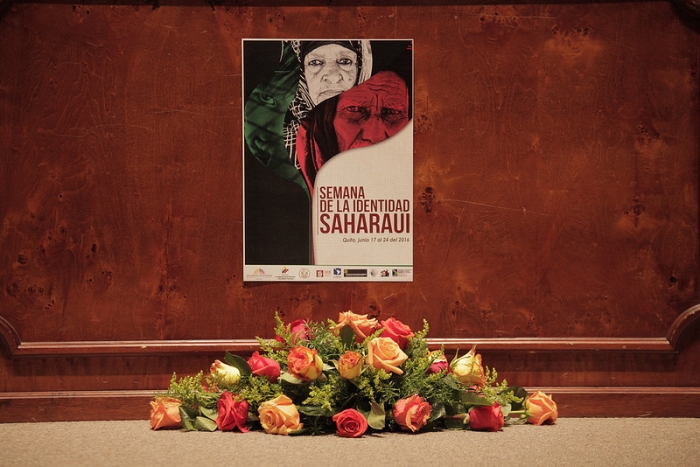
Quito, 26/06/16(SPS)-. Cuerpo diplomático, autoridades gubernamentales, asambleístas, catedráticos y ciudadanía asistieron a la clausura de la “Semana de la Identidad Saharaui”, según nota de prensa de la Embajada de la RASD en Ecuador.

La vicepresidenta de la Comisión de Relaciones Internacionales de la Asamblea, Dora Aguirre, agradeció el apoyo de varias instituciones y personajes a esta iniciativa, que buscaba visibilizar y concienciar la realidad que vive la República Árabe Saharaui Democrática (RASD), que aún tiene territorio bajo la colonización de Marruecos.

La  Semana de la Identidad Saharaui acogió  la exposición fotográfica “Exiliados en la Arena”, muestras de cines y documentales, paneles, conservatorios y seminarios, en diferentes instituciones como la FLACSO, Universidad Católica, Asamblea Nacional, Instituto de Altos Estudios Nacionales y la Casa de la Cultura. El evento fue organizado por la Comisión de Relaciones Internacionales de la Legislatura, la Cancillería y la Embajada de Saharaui en Ecuador.

“El tema medular por el que hemos abanderado esta iniciativa es la defensa de la autodeterminación  del pueblo saharaui, la protección de la soberanía, la libertad, el derecho a vivir en paz, el respeto irrestricto a los derechos humanos. Si a un solo pueblo se le vulneran estos derechos, las futuras generaciones podrían estar sufriendo estas posibilidades”, enfatizó la asambleísta Dora Aguirre.

La programación tuvo como fin difundir la situación actual del pueblo saharaui, la inacción de la comunidad internacional para garantizar el derecho a la autodeterminación, promover la cultura e identidad de este pueblo y contribuir a la ampliación del proceso de solidaridad con la causa de este pueblo y su derecho a su independencia.

Dora Aguirre invitó a conocer la realidad del pueblo saharaui y su lucha histórica por más de 40 años por su libertad, así como de quienes ocasionan estos problemas de desplazamientos para la ocupación de territorios. En el Sahara , dijo, han tenido que huir a refugios en los desiertos de Argelia más de 300 mil personas, que viven en campamentos durante muchos años, en condiciones infrahumanas, injustas e indignas. “Esto hay que denunciarlo en todos los espacios”, exclamó la legisladora.

Recordó que en el mundo hay más de 65 millones de refugiados que han tenido que escapar por guerras, conflictos armados, problemas económicos, sociales y políticos, causados, principalmente, por tener el control económico y geopolítico, porque quieren aprovecharse no solo de los territorios, sino también de sus riquezas. Afirmó que de esos 65 millones de refugiados más del 65% son niños y niñas.

Por su parte, el embajador de Saharaui en Ecuador, Alisalem Sidi Zein, contó que Marruecos no ha dado paso al referéndum porque ha explotado y explota muchos recursos naturales en el territorio que está colonizado. Denunció la pasividad de organismos internacionales para exigir a Marruecos que acate las resoluciones expedidas en el sentido del cese al fuego y la celebración de los comicios.

El embajador agradeció a todas las instituciones que han colaborado en la realización de la Semana de la Identidad Saharaui, pero en especial a la Asamblea Nacional y al Ministerio de Relaciones Internacionales.

La humanidad ha visto a cientos de millones liberarse de la opresión extranjera, este tema debe concitar la máxima atención internacional…Nuestro país reconoció oficialmente a la República Árabe Saharaui Democrática desde 1983… Propongamos cerrar el siglo del coloniaje y eso también es responsabilidad de la comunidad internacional, aseguró Lourdes Puma, subsecretaria para Asia, África y Oceanía de la Cancillería de Ecuador .SPS

a través de La Semana de la Identidad Sahraui celebrada en Ecuador mostró realidad de un pueblo colonizado | Sahara Press Service

Adduh: el CS reconoce que la expulsión de Marruecos de la componente civil de la MINURSO representa una amenaza directa a la paz y la seguridad en la región | Sahara Press Service

jatri-adduh_0

Bir Lehlu (Territorios Liberados de la RASD),26/06/16(SPS)-. El Presidente de la República y Secretario General del Frente Polisario, Sr. Jatri Adduh, aseguró que  el Consejo de Seguridad subrayó la necesidad urgente de que la MINURSO retorne plenamente a sus funciones» y  reconoció asimismo  que la expulsión de Marruecos de  la componente civil de la MINURSO representa una amenaza directa a la paz y la seguridad en la región del Sahara Occidental.


En una carta  dirigida  al  Secretario General de la ONU ,Sr. Ban Ki Moon ,el POLISARIO expresa su preocupación  por la falta de avances en el proceso  de paz  que supervisa  las Naciones Unidas para encontrar una solución justa, equitativa y pacífica que  garantice  el derecho del pueblo saharaui a la libre determinación de conformidad con  las resoluciones  de la Asamblea General de las Naciones Unidas.


“Hasta el momento no ha regresado ni un solo funcionario de los expulsados ni habido  ningún progreso real para que  la MINURSO  pueda regresar a su pleno funcionamiento”, señaló Adduh  y  agregó” parece  que las Naciones Unidas todavía permite a Marruecos  continuar con sus  intentos para amenazar y debilitar la independencia y la credibilidad de la MINURSO, cuyo mandato consiste en organizar un referéndum de autodeterminación para el pueblo del Sáhara occidental”.


El Presidente de la República expresó su rechazo a la” reunión técnica», que se celebró entre los funcionarios de las Naciones Unidas y Marruecos el 10 de junio de 2016 en la ciudad de El Aaiún, subrayando que  no hay precedente para la realización de tales reuniones en  una  zona ocupada  del Sahara Occidental en la que  Marruecos  no tiene  soberanía en virtud del derecho internacional.

Adduh  subrayó   la necesidad de desarrollar un plan para el proceso de las conversaciones directas e intensas y de alto nivel entre el Frente Polisario y Marruecos. SPS

a través de Adduh: el CS reconoce que la expulsión de Marruecos de la componente civil de la MINURSO representa una amenaza directa a la paz y la seguridad en la región | Sahara Press Service

Polisario Front expresses concern over lack of progress after UN SC resolution 2285 | Sahara Press Service

jatri-adduh_0


Bir-Lehlou (Liberated Zones), June 25, 2016 (SPS) –  President of Republic, Secretary General of the Polisario Front, Jatri Adduh, has expressed the concern of the Polisario Front over the lack of progress after two months of the adoption of UN Security Council resolution 2285(2016) on Western Sahara.

In a letter to UN Secretary-General Mr. Ban Ki-moon, President of Republic said “I am writing to express our concern related to the fact that nearly two months after the adoption of UN Security Council resolution 2285(2016) on Western Sahara, there is no progress on the UN political process to find a just, fair and peaceful solution that will ensure the right of the Saharawi people to self-determination in accordance with UN General Assembly resolution 1514(XIX) and the UN settlement Plan that was endorsed by the Security Council resolutions 658(1990) and 690(1991).”

“By adopting resolution 2285(2016), the Security Council has underlined the urgent need for the United Nations Mission for the Referendum in Western Sahara (MINURSO) to return to ‘full functionality’, and has recognized that Morocco’s expulsion of the MINURSO civilian personnel constitutes a direct threat to peace and security in Western Sahara and the region. Morocco’s actions are a brazen attempt to shut down the UN’s role in Western Sahara, despite the legal obligations it had agreed to in accepting MINURSO’s presence in Western Sahara.”

“So far, not a single staff member has been returned nor has tangible progress been made to restore the full-functionality of MINURSO. Instead of holding Morocco accountable to implementing resolution 2285(2016) in good faith, it seems to us that the UN continues to allow Morocco to persist in its attempts to intimidate and undermine the independence and credibility of MINURSO, which was mandated to organize a self-determination referendum for the people of Western Sahara,” added the President of the Republic.

The President of the Republic called for return to full functionality of the UN Mission for the Referendum in Western Sahara (MINURSO) and outlining a process for “direct, intensive, time-bound and high-level talks” between the Frente POLISARIO and Morocco.

Below is the full text of the letter:

“ 25 June 2016

To His Excellency, Mr. Ban Ki-moon

UN Secretary-General

United Nations, New York

Your Excellency,

a través de Polisario Front expresses concern over lack of progress after UN SC resolution 2285 | Sahara Press Service

Des lourdes peines prononcées contre deux militants sahraouis par la cour marocaine à d’El Aaiun occupée | Sahara Press Service

li3ichy_0

El Aaiun (capitale occupée du Sahara occidental), 25 juin 2016 (SPS) La cour d’appel marocaine dans la ville occupée d’El Aaiun a condamné vendredi les deux militants sahraouis, Ahmetou Kouiri et Ahmed Al Aichi à des peines allant d’un an à dix mois, a-t-on appris de source du ministère des territoires occupés.

Les deux militants sahraouis ont été emprisonnés lors de leur participation aux manifestations réclamant le droit du peuple sahraoui à la liberté et à l’indépendance.

D’autre part, les autorités d’occupation marocaines ont arrêté à la ville occupée de Boujdour quatre militants de l’intifada pacifique de l’indépendance à cause de leur participation dans un sit-in demandant la décolonisation du Sahara occidental.

Il s’agit de Hamza Chara, Abdullah Khaya, Abedin Abbaha et Hamza Baziz. (SPS)

a través de Des lourdes peines prononcées contre deux militants sahraouis par la cour marocaine à d’El Aaiun occupée | Sahara Press Service

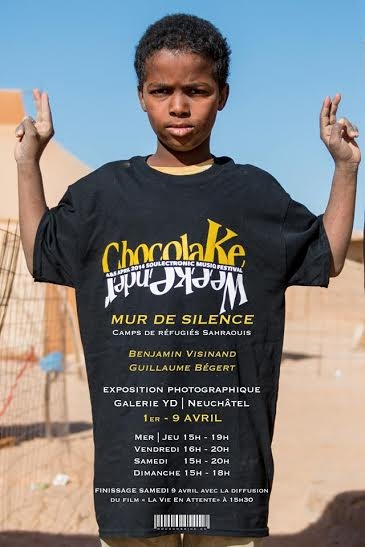
La ciudad suiza Lausana acoge una exposición sobre la causa saharaui | Sahara Press Service

mur_1

Lausana (Suiza), 25/06/16 (SPS) – Una exposición sobre la causa saharaui se inauguró este  jueves en el  Ayuntamiento de Lausanne, Plaza  de la Palud, en presencia del Alcalde Sr. Daniel Brélaz, y una delegación saharaui.

La exposición  fue organizada por un grupo de jóvenes simpatizantes con la causa saharaui y el Comité Suizo de  solidaridad con el pueblo saharaui, además de la ADER S / Asociación (panel solar).

El AlcaldeDaniel Brélaz subrayó  que la nobleza lucha del pueblo saharaui por más de cuarenta años, «requerirá de   la comunidad internacional  cumplir la promesa de celebrar un referéndum de autodeterminación”, recordando que la solidaridad con esta justa causa está aumentando día tras otro.

Por su parte, el presidente del Comité Suizo para la Solidaridad con el Pueblo Saharaui, Sr. Brithir Birigo  elogió   la resistencia mostrada por el pueblo saharaui contra la agresión  marroquí.

La exposición contó con la presencia de un gran número de activistas y ciudadanos .La exposición continuará durante diez días y en varias ciudades suizas. SPS

a través de La ciudad suiza Lausana acoge una exposición sobre la causa saharaui | Sahara Press Service

Llaman a lucha por la paz mundial en Foro de Sao Paulo en El Salvador | Sahara Press Service

4Foro-arabe

El Salvador (San Salvador), 25/06/16 (SPS).- El representante de la República Árabe Saharaui en México, Ahmed Mulay Ali, de la delegación del Frente Polisario que participa en el Foro de Sao Paulo, aseguró que conservar los espacios conseguidos, es un reto fundamental de la izquierda, fuentes Prensa Latina.

En declaraciones a Prensa Latina, Mulay Ali enfatizó que los países latinoamericanos y caribeños, así como de otras regiones del mundo, tienen que hacer todos los esfuerzos posibles por mantener y ampliar los espacios conseguidos en el poder por vías legítimas.

«Otro reto es asegurar la paz. El mundo está viviendo una situación bastante difícil», recalcó el representante de una de las naciones más afectadas por la usurpación colonialista del norte de África.

Llamó la atención sobre lo que ocurre en el Medio Oriente, en África y en su propio pueblo donde, dijo, Marruecos está poniendo muchos frenos a las Naciones Unidas y su Consejo de Seguridad en relación con sus resoluciones y decisiones sobre la realización del referéndum de autodeterminación del Sahara Occidental.

Por eso estamos aquí en el XXII Encuentro del Foro de Sao Paulo, para informar a los cientos de participantes la situación de su país y abogar por la paz.

Mulay Alí destacó el nivel del organización de esta cita que tiene lugar en el Centro Internacional de Ferias y Convenciones, en esta capital, y a la que asisten representantes de partidos políticos y movimientos de izquierda y progresistas de Latinoamérica y del Caribe que integran el Foro, así como de Asia, África, Europa, Estados Unidos y Canadá. SPS

a través de Llaman a lucha por la paz mundial en Foro de Sao Paulo en El Salvador | Sahara Press Service